
BNG and Small Sites: Current Requirements and Emerging Proposals
Providing clear guidance on how Biodiversity Net Gain (BNG) applies to small sites, including the de minimis exemption, the current planning rules and proposed reforms.
BIODIVERSITY NET GAIN AND SMALL SITES: WHAT DEVELOPERS NEED TO KNOW NOW
Tree Ecology Solutions Ltd 2026
1/15/20263 min read
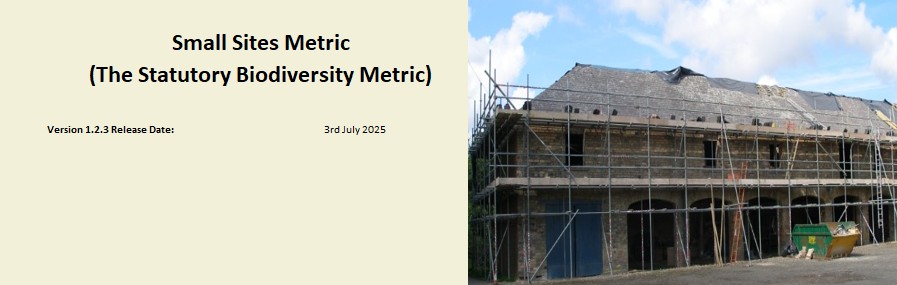

Biodiversity Net Gain and Small Sites: Current Requirements and Emerging Proposals
Mandatory Biodiversity Net Gain (BNG) now forms part of the statutory planning framework in England. Introduced through the Environment Act 2021 and associated secondary legislation, BNG requires applicable developments to deliver a minimum 10% net gain in biodiversity value, secured for a minimum period of 30 years.
At Tree Ecology Solutions Ltd, we are frequently asked how BNG applies to small development sites, particularly in light of recent Government commentary on potential future exemptions. This article sets out the current legal position, clarifies the existing de minimis exemption, and explains how this differs from non-statutory proposals for further reform.
Current Legal Position
As matters stand, BNG applies to both major and small developments.
Small sites have been within scope since 2 April 2024. Where BNG applies, planning applications are expected to be supported by proportionate biodiversity information, which typically includes:
A biodiversity value calculation, usually undertaken using the Small Sites Metric
A Biodiversity Gain Plan demonstrating how the required 10% net gain will be achieved
Evidence that the gain will be secured in accordance with statutory requirements
Local planning authorities are required to assess applications against the current statutory framework. Anticipated future changes do not remove the need to comply with existing regulations.
Site Size and the Existing De Minimis Exemption
Planning Practice Guidance is clear that site size alone does not determine whether BNG applies. Instead, the legislation includes a specific de minimis exemption for developments that result in negligible biodiversity impact.
In line with current guidance, a development may fall within the de minimis exemption where:
The development does not impact priority habitats, and
The area of habitat loss or degradation falls below the prescribed de minimis thresholds
Where a proposal genuinely meets the de minimis criteria, mandatory BNG requirements — including submission of a biodiversity metric and a Biodiversity Gain Plan — do not apply.
However, the exemption is impact-based rather than area-based. Many small sites contain gardens, grassland, trees, hedgerows or other habitats which, when affected by development, exceed de minimis thresholds. In such cases, BNG remains applicable notwithstanding the limited size of the site.
Planning authorities may still require sufficient ecological information to demonstrate that the exemption has been correctly applied, particularly where habitats are present or where there is uncertainty over baseline conditions.
Distinction Between the De Minimis Exemption and Proposed Size-Based Reform
It is important to distinguish between:
The de minimis exemption, which is already embedded in legislation and guidance, and
Proposed future exemptions based on site area, which have been referenced in Government statements but are not currently in force
Recent commentary has suggested that a future exemption may be introduced for developments on sites below 0.2 hectares (2,000 m²). At present, this remains a policy intention rather than a statutory change.
No amended regulations, updated Planning Practice Guidance or transitional arrangements have been published. Until such changes are formally enacted, local planning authorities must continue to apply the existing framework.
Practical Implications for Small Developments
In practice, small development sites currently fall into one of three categories:
Developments that clearly meet the de minimis exemption, subject to confirmation through proportionate assessment
Developments that require full BNG compliance, typically via the Small Sites Metric
Developments where a short ecological appraisal is required to determine whether BNG applies
From a planning-risk perspective, it is generally preferable to demonstrate why BNG does or does not apply, rather than relying on assumptions about site size or anticipated future reform.
Tree Ecology Solutions Ltd – Our Approach
Tree Ecology Solutions Ltd provides planning-focused ecological and arboricultural advice for small and medium developments across England. Our approach to BNG on small sites is proportionate, policy-led and evidence-based.
We regularly assist with:
Assessment of whether the de minimis exemption applies
Proportionate Small Sites Metric calculations
Design-led biodiversity retention and enhancement
Alignment with local plan policy and validation requirements
Planning appeals where BNG applicability is disputed
Our focus is on reducing delay and unnecessary cost while ensuring submissions remain robust and defensible.
Looking Ahead
Further Government guidance is expected to clarify whether any additional exemptions for small sites will be introduced, and how these would interact with existing exclusions and transitional arrangements.
Until such guidance is published and brought into force, BNG remains a live statutory requirement for small developments, subject only to the exemptions that already exist in law.
Summary
Biodiversity Net Gain currently applies to small sites unless a statutory exemption, such as de minimis, can be clearly demonstrated. While further reform has been signalled, it has not yet been enacted. Planning applications should therefore continue to address BNG in a proportionate and policy-compliant manner
Contact
For enquiries, quotations or early project advice:
info@treeecologysolutions.co.uk
© 2025 Tree Ecology Solutions Ltd.
All rights reserved.


Registered Office : 167-169 Great Portland Street,5th Floor,W1W 5PF